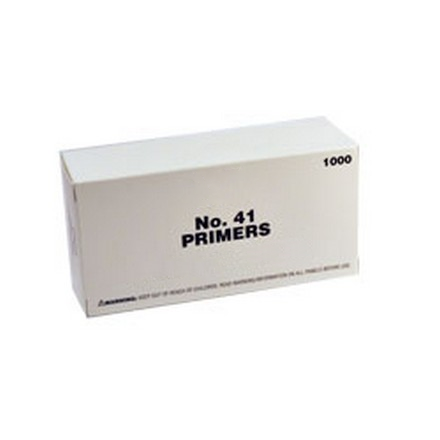
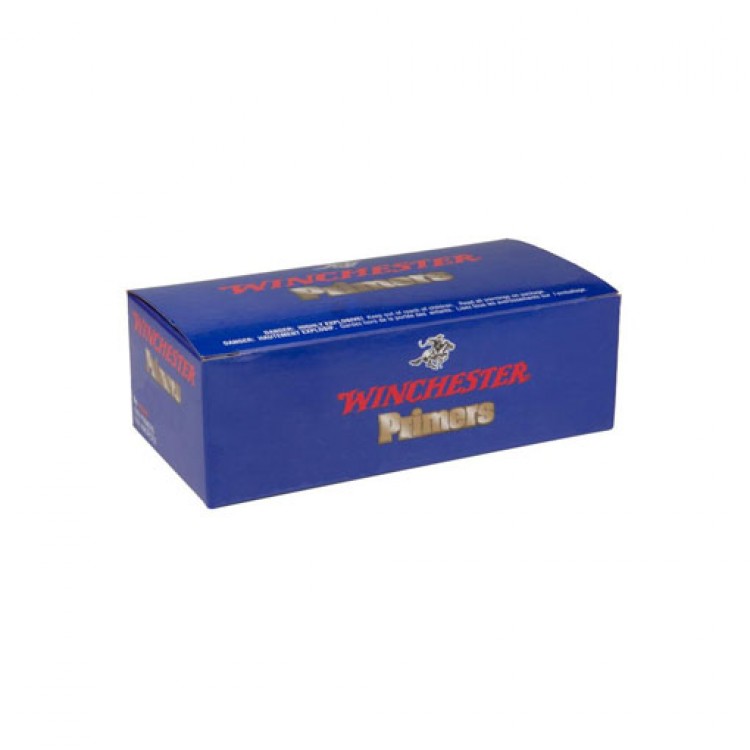
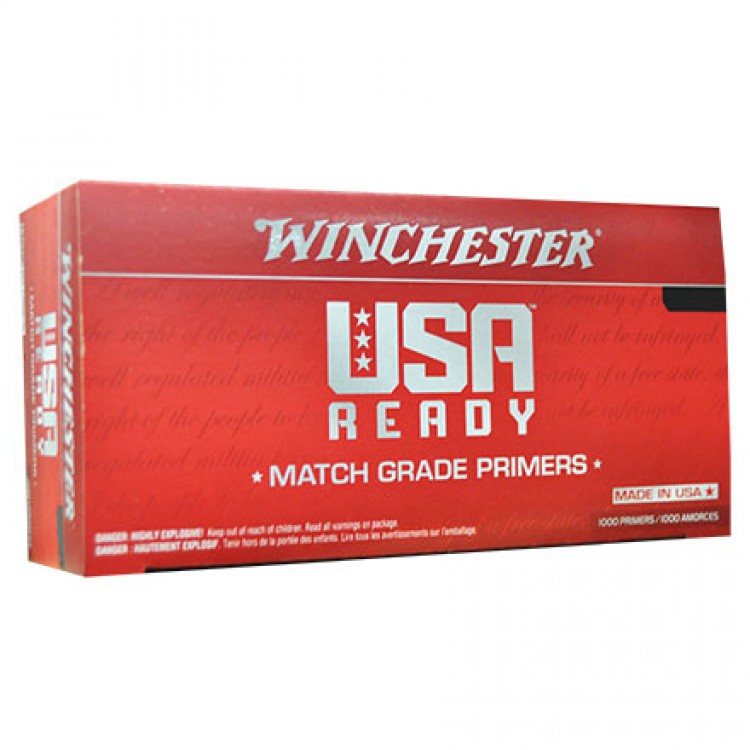
Winchester Small Rifle #41 Primers | 1,000 Count
$150.00
Engineered to the military M41 specification, Winchester Small Rifle #41 Primers deliver enhanced safety and reliability for modern semi-automatic platforms. Featuring an extra-hard brass cup to mitigate slam-fire risk and a pressure-moderating priming compound, they are the definitive choice for loading .223 Remington/5.56 NATO and other gas-operated rifle cartridges.
Winchester Small Rifle #41 Primers | 1,000 Count
In the dynamic evolution of the modern sporting rifle, particularly the ubiquitous AR-15 platform, a critical engineering challenge emerged: how to maintain the exceptional reliability and rapid-fire capability of military-specification ammunition while adapting it for the vast commercial market with its diverse array of components and shooting conditions. The answer lies not in the rifle’s receiver or barrel, but in the minute, yet profoundly significant, ignition component at the heart of every cartridge. The Winchester Small Rifle #41 Primers 1,000 Count brick represents the definitive commercial adaptation of a stringent military standard. These are not merely “harder” small rifle primers; they are a purpose-engineered ignition system designed with a specific, critical mandate: to provide absolute ignition reliability in gas-operated semi-automatic rifles while actively contributing to safer pressure management in the high-volume, mixed-component environment of the civilian shooting world. For the discerning reloader who fuels their AR-15, Mini-14, or other gas-gun platform, understanding and utilizing the Winchester #41 Primer is a fundamental step in building ammunition that is as reliable as it is responsible.
The “#41” designation is a direct descendant of the U.S. Military’s M41 specification primer, developed to meet the rigorous demands of the M16/M4 weapons system. The core innovation of the Winchester 41 Primers is their precisely calibrated sensitivity profile. They feature a cup constructed from a thicker, harder brass alloy than a standard small rifle primer. This enhanced cup requires a more decisive firing pin strike to detonate, a design feature specifically intended to reduce the risk of a potentially catastrophic “slam-fire”—an unintentional discharge occurring as the bolt closes and the firing pin moves forward under inertia alone. While slam-fires are exceedingly rare with quality commercial components, the #41 primer eradicates this variable entirely, providing a critical margin of safety for high-volume, rapid-fire use. This 1,000-count brick empowers the serious shooter to produce vast quantities of practice, competition, and defensive ammunition with an inherent layer of safety engineered into every round, matching the reliability ethos of the platforms they are built for.
Deconstructing the Specification: The Dual Mandate of Reliability and Pressure Mitigation
The Winchester Small Rifle #41 Primers achieve their unique role through a trifecta of carefully balanced design parameters that differentiate them from both standard and magnum small rifle primers.
1. The Fortified, High-Hardness Cup: The First Line of Defense
The primer cup is the most visually distinct feature. Fabricated from a specially formulated and hardened brass alloy, it is noticeably more robust. This serves two simultaneous purposes:
-
Slam-Fire Prevention: The increased hardness and rigidity directly raise the energy threshold required for ignition. This ensures that only the full, controlled impact of the firing pin driven by the hammer or striker spring—not the lighter inertial tap during bolt closure—can detonate the primer.
-
Enhanced Pressure Containment: The thicker, stronger cup provides a superior gas seal under the high, often spikey pressure curves generated by the fast-burning powders (e.g., H335, BL-C(2), CFE223, TAC) that are optimal for the .223 Remington/5.56 NATO. It resists flow and deformation at peak pressure, maintaining pocket integrity over multiple reloads and preventing gas leakage that can erode the bolt face.
2. The Internally Tuned Anvil: Consistency Under Demand
The anvil within the #41 primer is designed to work in concert with the hard cup. Its geometry ensures that when the sufficient energy of a proper firing pin strike is delivered, it focuses that force with maximum efficiency to reliably crush the priming compound. This guarantees consistent ignition despite the hardened cup, ensuring that reliability is never sacrificed for safety. The consistency of this internal component is key to the low velocity deviation these primers can produce in a tuned load.
3. The “Mil-Spec” Priming Compound: Hot, Yet Controlled
The priming compound within the #41 is a critical element of its performance matrix. It is formulated to be:
-
Energetic and Reliable: It produces a hot, robust flame kernel sufficient to positively ignite ball powders and other common .223 propellants, even in cold-weather conditions, guaranteeing cycle-of-operation reliability in semi-automatic actions.
-
Pressure-Moderating: Here lies a less-discussed but vital characteristic. The specific burn rate and ignition curve of the #41 compound are tailored to work in synergy with the hard cup. This combination can result in a slightly lower peak pressure for a given powder charge compared to a standard primer, while still delivering excellent efficiency. This creates a wider margin of safety, especially important when using mixed-range brass with varying internal capacities or when loading near maximum data. It is an inherent “cushion” for the handloader.
The Critical Application Spectrum: Where the #41 Primer is Essential, Recommended, and Advised Against
Primary and Highly Recommended Applications:
-
.223 Remington / 5.56 NATO for Gas-Operated Semi-Automatics (AR-15): This is the round and platform for which the primer was conceived. It is the ideal choice for any .223 load destined for an AR, ensuring maximum safety and reliability.
-
300 AAC Blackout (for semi-automatic hosts).
-
6.5 Grendel, 6.8 SPC, .224 Valkyrie: Other modern AR cartridges benefit equally from the safety and pressure-management characteristics.
-
High-Volume or Rapid-Fire Training Ammunition: Where the rifle will be run hard and fast, the slam-fire resistance is a paramount safety feature.
Suitable with Consideration:
-
Bolt-Action Rifles in .223: While perfectly safe and functional, the harder cup may require a check to ensure your firing pin spring provides a sufficiently sharp strike for 100% reliability. Most modern bolt actions will have no issue.
-
Other Small Rifle Cartridges in Semi-Autos (e.g., 7.62×39 in an AK-pattern, .308 in an AR-10): The same safety principles apply. They are an excellent choice if loading for these platforms.
Not Recommended:
-
Standard-Pressure Pistol Cartridges: Do not use in 9mm, .38 Special, etc. The cup is too hard for most pistol firing pins and dangerous pressure can result.
-
Where Maximum Velocity is the Sole Goal in a Bolt-Action: If you are chasing the absolute highest velocity from a .223 in a bolt gun for varminting, a standard primer might offer a slight edge in peak pressure (and thus velocity) with certain powders. The #41 prioritizes safety and consistency over the last 25 fps.
Reloading Protocol: Integrating the #41 for Optimal Performance
1. Follow Data, But Understand the Context: Reloading data developed with “small rifle primers” is generally safe to use with #41 primers, as they are a subtype of small rifle primer. Their pressure-moderating effect often provides an added safety buffer. However, always start at the published “start” charge and work up while watching for pressure signs.
2. Seating Requires Firm Consistency: The hard cup demands a firm, positive seating stroke. Ensure primers are seated fully flush to slightly below the case head. A hand-priming tool with good leverage is highly recommended to achieve consistent seating without strain.
3. Synergy with Powders: These primers excel with the spherical and short-extruded powders common in .223 loading. They provide the strong, reliable spark these powders need for consistent combustion in a semi-auto’s varying ignition environment.
4. Inspection and Testing: As with any new component, test a small batch for function (ensure they fire and cycle your action) before committing to a large loading session.
The Winchester Assurance: From Military Contract to Your Bench
The Winchester Small Rifle #41 Primers bring a piece of military-grade engineering specification to the commercial reloader. Winchester’s manufacturing ensures that the precise balance of hard cup and reliable compound is maintained across every lot, providing the consistency needed for accurate, safe handloads. Choosing this 1,000-count brick is a statement of intent. It signifies a commitment to building ammunition that respects the mechanical demands of the semi-automatic platform, prioritizes shooter safety, and delivers the unwavering reliability required for both practice and preparedness. In a world where the AR-15 is the definitive modern sporting rifle, the Winchester #41 Primer is the definitive ignition component to fuel it.
Specifications:
-
Quantity: 1,000 Primers
-
Type: Small Rifle, Military Specification (M41-type)
-
Cup: Extra-Hard Brass Alloy
-
Compound: Non-Corrosive, Reliable Mil-Spec Formula
-
Primary Purpose: .223 Rem/5.56 NATO for Semi-Automatic Rifles
-
Key Feature: Enhanced slam-fire resistance and pressure-moderating characteristics.
-
Packaging: 10 x 100-primer trays in sealed brick box.
Related Products
The universal ignition standard for modern rifle cartridges, Winchester Small Rifle Primers deliver consistent, reliable performance for today’s most popular calibers. This 1,000-count brick features non-corrosive priming compound and durable brass cups engineered for dependable ignition in a wide range of applications.
Secure your long-term reloading operation with the ultimate bulk supply. The Winchester Small Rifle Primers 5,000 Count case provides an industrial-grade reservoir of consistent, reliable ignition for high-volume production.
Command reliable ignition for your most demanding handgun loads. Winchester Small Pistol Magnum Primers deliver the hotter, more robust flame required to consistently ignite slow-burning magnum powders like H110 and Winchester 296.
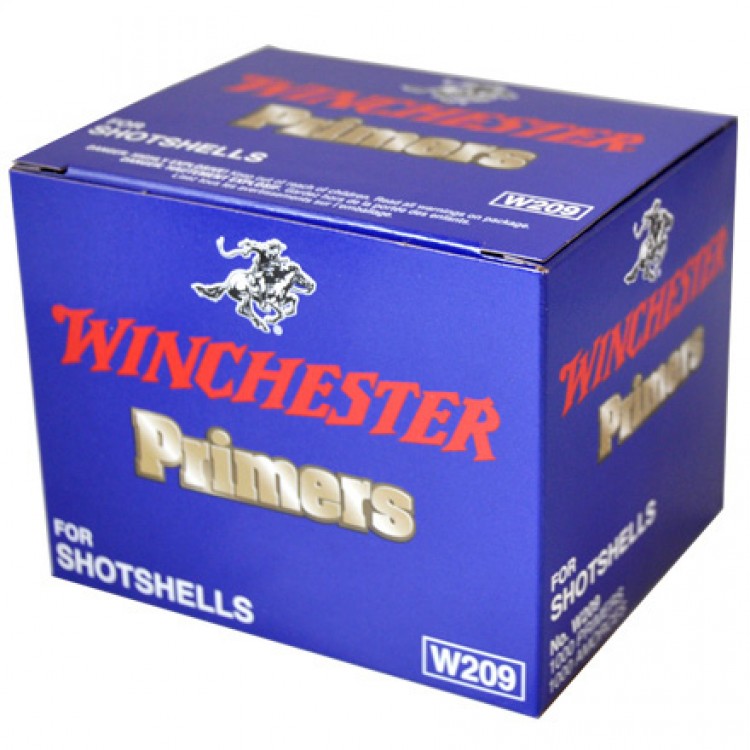
Engineered to the universal 209 standard, this brick of 1,000 Winchester Shotshell Primers delivers the precise, hot ignition required for consistent shotshell performance. Each brass-cup primer features a robust integral anvil and proprietary non-corrosive compound, providing reliable ignition for everything from light target loads to heavy magnum hunting rounds in 12, 20, and .410 gauge.
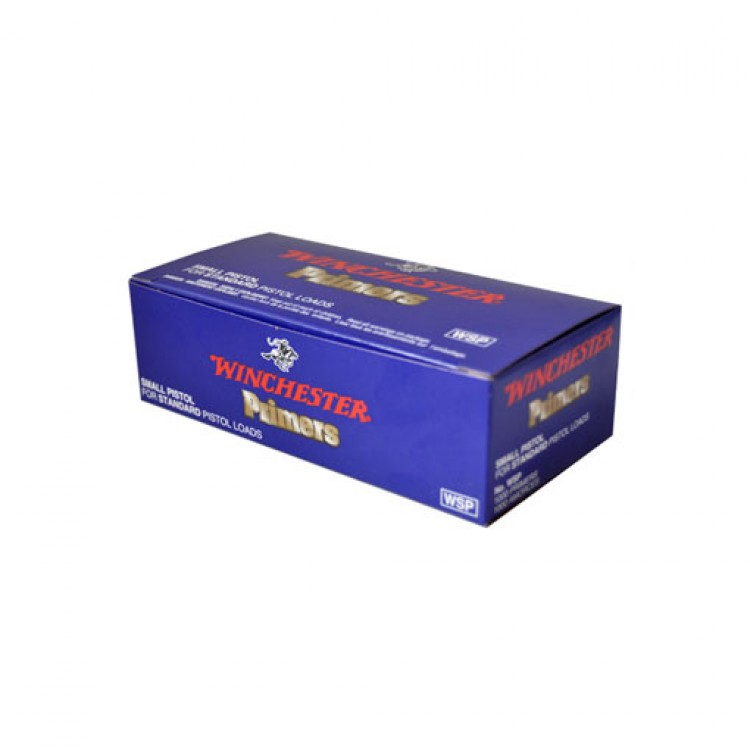
The essential ignition component for high-volume handgun reloading, Winchester Small Pistol Primers deliver reliable, consistent performance for the most popular centerfire cartridges. This 1,000-count brick features nickel-plated brass cups and a balanced priming compound engineered for optimal ignition with fast to medium-burning powders.
Winchester guarantees better sensitivity for more positive firing in all guns, carefully-controlled weights of primer mixtures, consistency in size and quality, precise measurements and tolerances for anvil heights, and stability in extremes of temperatures and humidity.
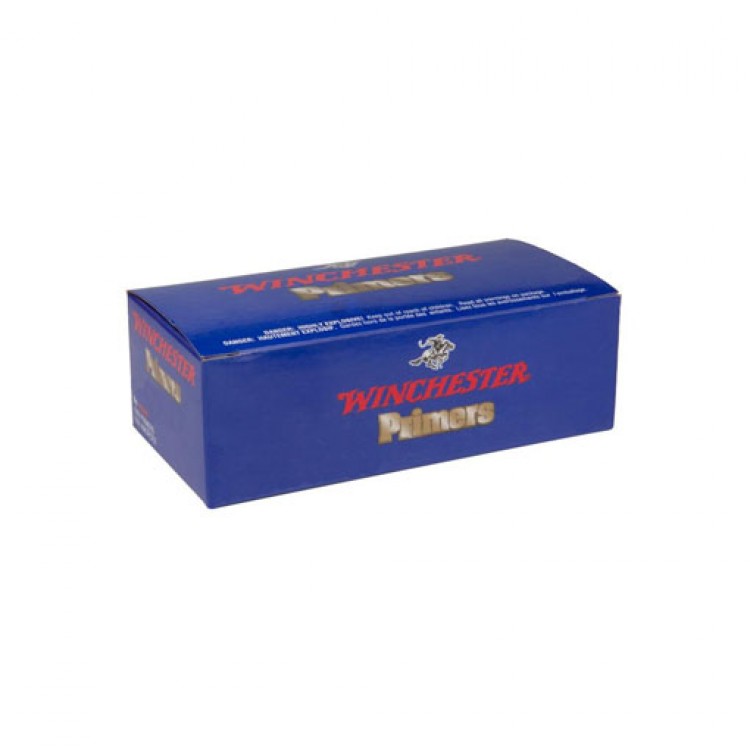
Winchester Large Rifle Magnum Primers deliver the robust, hot ignition required for magnum rifle cartridges. This 1,000-count brick features a specialized priming compound and hardened brass cup designed to reliably and completely ignite slow-burning powders like H1000 and Retumbo in large-volume cases. Essential for .300 Win Mag, 7mm Rem Mag, .338 Lapua, and others
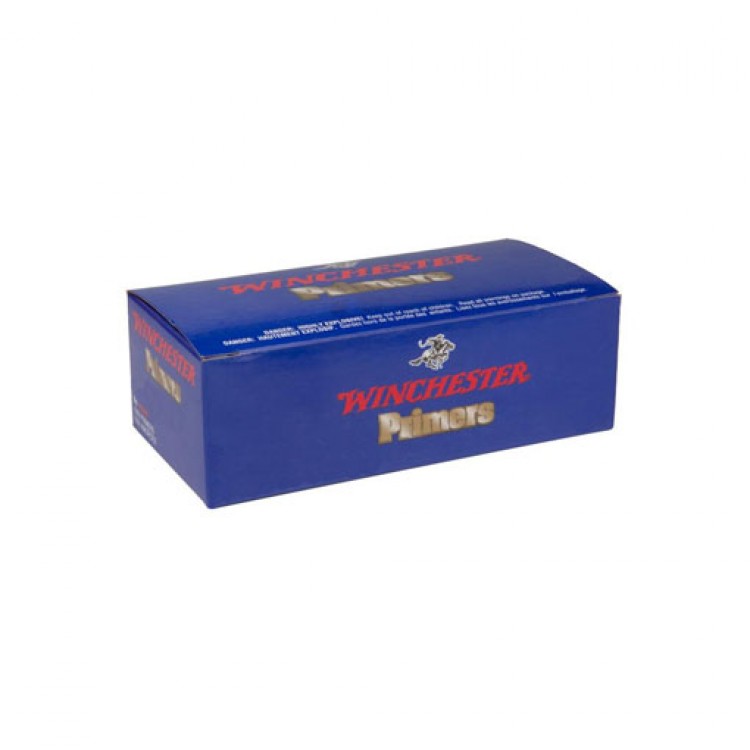
The universal standard for rifle cartridge ignition, Winchester Large Rifle Primers deliver consistent, reliable performance for a wide range of popular calibers. This 1,000-count brick features non-corrosive priming compound and durable brass cups engineered for safe, dependable ignition in standard and high-pressure applications.
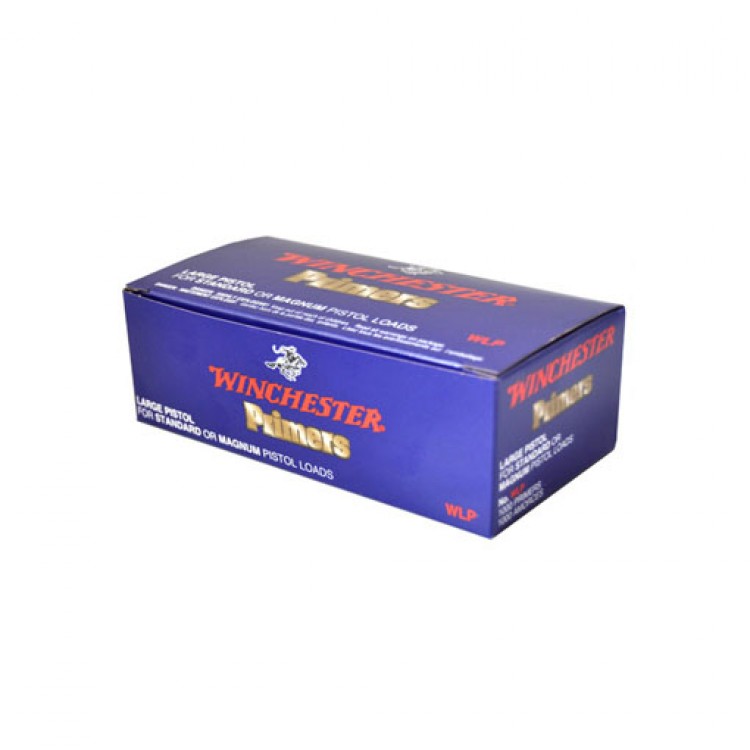
Built on a legacy of precision ignition, this brick of 1,000 Winchester Large Pistol Primers delivers the consistent, reliable performance required for serious reloading. Each nickel-plated primer is engineered with a proprietary priming compound and uniform brass cup to ensure dependable ignition across a wide spectrum of pistol cartridges—from .45 ACP and .44 Magnum to 10mm Auto and .357 Magnum.